
Eric Glandian - Food Business Blueprint
Learn how to scale your food business with Eric Glandian. Master retail, production, packaging, marketing, distribution, and sales growth strategies.
4.8(192 ratings)- A course by
- Eric Glandian
- Rating
- 4.8(192 ratings)
- Updated
- Language
- English
$49
4.8(192 ratings)$99 for 1 year or $199 lifetime · unlocked on the Gmail you log in with
- Instant delivery
- Verified files
- WhatsApp support
- Pay on WhatsApp
What you'll learn
- Build a scalable food business strategy
- Expand into retail stores and distribution
- Improve food production and packaging
- Grow sales through online and retail channels
- Manage brokers, hiring, and manufacturing
- Prepare your food brand for business growth
Proof
Course description
Eric Glandian – Food Business Blueprint: Learn How to Scale Your Food Business to $1 Million
Building a food business takes more than creating a product people enjoy. You also need the right production systems, packaging, marketing strategy, distribution channels, and sales processes to turn your product into a growing business.
Many food entrepreneurs struggle when moving beyond their first customers. They might have a product ready for sale but lack the knowledge and systems needed to enter retail stores, manage production, work with brokers, or expand their customer base.
That's where Eric Glandian's Food Business Blueprint comes in.
Food Business Blueprint is a business training program designed for food entrepreneurs who want to grow their existing food brands and work toward $1 million in sales. Eric shares the strategies and practical systems he used to grow his food company, Zen Monkey Overnight Oats, from zero to $2.5 million in sales and achieve national distribution in 3,000 stores.
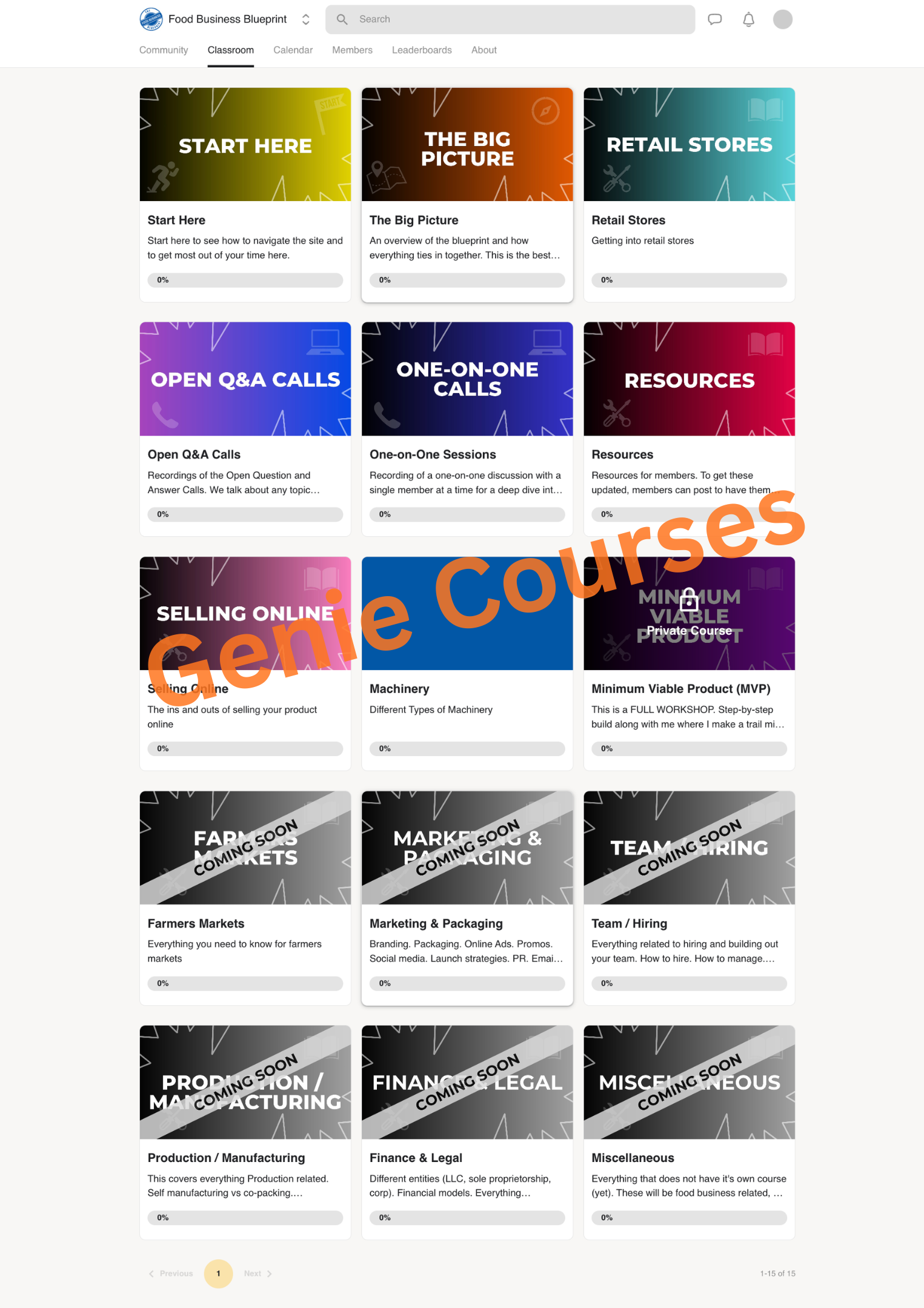
The program focuses on practical business education rather than theory, giving members access to actionable lessons, real business documents, training sessions, and live calls.
What Is Food Business Blueprint?
Food Business Blueprint is a business growth training program created by Eric Glandian for entrepreneurs operating food and beverage businesses.
Its main objective is to help food business owners understand how to build, manage, and scale their operations.
The program covers different parts of the food business journey, including retail expansion, farmers markets, production, packaging, advertising, online sales, hiring, and distribution.
Instead of focusing on just one area, the blueprint provides a broader look at the systems and decisions involved in growing a food brand.
The central goal is to help entrepreneurs develop a structured approach to scaling their businesses rather than depending entirely on luck or random marketing efforts.
Who Is Eric Glandian?
Eric Glandian is the founder of Zen Monkey Overnight Oats and the creator of Food Business Blueprint.
According to the program description, he grew his food company from zero to $2.5 million in sales and achieved national distribution across 3,000 stores.
His experience forms the foundation of the training program.
Rather than simply discussing general entrepreneurship concepts, Eric shares the strategies, documents, and business processes used in building and growing his own food company.
Through Food Business Blueprint, he aims to help other food entrepreneurs understand the practical challenges of scaling a food product business.
What Will You Learn Inside Food Business Blueprint?
The program covers several important areas of food business management and growth.
1. Food Business Strategy and Planning
Growing a food company requires a clear understanding of the bigger picture.
You need to know your target customers, product positioning, sales opportunities, operational requirements, and long-term business goals.
Food Business Blueprint focuses on helping entrepreneurs understand the overall strategy behind scaling a food brand.
This broader perspective can help business owners make more informed decisions about where to invest their time, resources, and money.
2. Retail Expansion and Distribution
Getting your product into retail stores can create new opportunities for business growth.
However, retail expansion involves more than convincing a store to stock your product. Entrepreneurs also need to understand distribution, pricing, production capacity, and relationships with retail partners.
The program covers retail and distribution as major parts of its training.
It also explores the role of brokers and how food brands can approach the process of expanding their presence in the market.
3. Farmers Markets and Online Sales
Farmers markets and online platforms provide different opportunities to reach customers.
Farmers markets allow food entrepreneurs to introduce their products directly to consumers, receive feedback, and understand buying behavior.
Online sales provide another channel for reaching customers beyond local markets.
Food Business Blueprint includes both farmers markets and online sales among its key training topics, helping members explore different ways to generate revenue.
4. Food Production and Manufacturing
As sales increase, production becomes an increasingly important part of running a food business.
A process that works for small batches may not be suitable when customer demand grows.
The program covers production, self-manufacturing, and copackers.
These topics help entrepreneurs understand different production approaches and consider how to manage manufacturing as their business expands.
5. Packaging and Shelf Life
Packaging plays an important role in the food industry.
It affects how customers perceive a product, how it is presented in retail stores, and how it is protected during storage and distribution.
Shelf life is equally important because food businesses need to understand how long their products remain suitable for sale and how storage and handling affect product quality.
Food Business Blueprint includes packaging and shelf life among its core training topics.
6. Advertising, Hiring, and Business Operations
Growing a food company also means building systems beyond the product itself.
Advertising can help generate awareness and attract customers, while hiring allows entrepreneurs to develop the team needed to support expanding operations.
The program also covers machinery and investors, giving members exposure to additional decisions that may become relevant as their businesses grow.
What Do You Get With Food Business Blueprint?
The program offers several educational resources designed to help members apply what they learn.
Actionable Video Lessons
Members receive access to a library of practical lessons, screen recordings, and over-the-shoulder training.
These resources are designed to demonstrate business processes and explain how different food business operations work.
Real Business Documents and Templates
One of the notable features is access to actual business materials.
These include Excel spreadsheets, emails, PowerPoint presentations, and other documents used in business operations.
Having access to these resources can give entrepreneurs practical examples of how business systems are organized.
Live Calls With Eric
The program also includes live calls with Eric Glandian.
These sessions provide an opportunity for members to engage with the instructor and learn from his experience in building and scaling a food company.
Broad Business Training
The curriculum covers retail, farmers markets, production, packaging, advertising, online sales, brokers, hiring, copackers, self-manufacturing, investors, shelf life, and machinery.
This broad subject coverage makes the program relevant to entrepreneurs dealing with different stages of food business growth.
Who Should Join Food Business Blueprint?
Food Business Blueprint is designed for established food entrepreneurs rather than people who are only thinking about starting a food business.
It may be particularly useful for:
Food business owners looking to expand their sales.
Entrepreneurs preparing to enter retail stores.
Food brands interested in national distribution.
Business owners struggling with production and manufacturing.
Entrepreneurs exploring online sales and advertising.
Food companies considering brokers, investors, or additional employees.
The program specifically positions itself as a high-level business group, not a community for hobbyists.
Important Requirement: You Must Have an MVP
Before joining Food Business Blueprint, you must already have a Minimum Viable Product (MVP).
An MVP in this program means more than having an idea or an unfinished food product.
Your product must have consumer-ready packaging, nutrition facts, and actual sales.
This requirement is important because the training focuses on scaling an existing food business rather than teaching someone how to develop a product from the beginning.
If you don't have an MVP yet, Eric offers a separate MVP Build-Along Workshop through Food Business Blueprint's website.
You don't need to purchase that workshop to join the main program, but you must meet the MVP requirement.
What Is the Main Goal of Food Business Blueprint?
The central goal is to help food entrepreneurs understand the systems involved in growing a food company.
Reaching $1 million in sales requires more than a good product. It involves effective production, appropriate packaging, strong distribution relationships, marketing, financial planning, and the ability to manage increasing demand.
Food Business Blueprint brings these subjects together in one training environment.
The program shares strategies based on Eric's experience with Zen Monkey Overnight Oats, providing entrepreneurs with practical business insights they can evaluate and adapt to their own operations.
However, the advertised $1 million sales target is a program goal, not a guaranteed outcome. Actual business results depend on factors such as product demand, pricing, competition, production capacity, and execution.
Final Thoughts: Build a Stronger Food Business With Eric Glandian
Scaling a food business requires more than developing a product and finding customers. You need to understand retail, manufacturing, distribution, packaging, marketing, and the operational systems that support business growth.
Eric Glandian's Food Business Blueprint brings these important subjects together through practical lessons, real business documents, and live training sessions.
For entrepreneurs who already have a market-ready food product and are actively making sales, the program offers a structured way to learn about the challenges and opportunities involved in scaling a food brand.
Ready to take your food business to the next level? Explore Food Business Blueprint and learn the strategies, systems, and practical approaches needed to build a more scalable food company.
Frequently Asked Questions (FAQs)
1. What is Food Business Blueprint?
Food Business Blueprint is a food business training program created by Eric Glandian to help entrepreneurs understand how to grow and scale their food companies.
2. Who created Food Business Blueprint?
The program was created by Eric Glandian, founder of Zen Monkey Overnight Oats.
3. What is the main goal of Food Business Blueprint?
The program aims to teach food entrepreneurs how to work toward $1 million in sales through practical business strategies and operational systems.
4. Do I need an existing food product to join?
Yes. You must have a Minimum Viable Product (MVP) with consumer-ready packaging, nutrition facts, and actual sales.
5. What if I don't have an MVP?
Eric offers a separate MVP Build-Along Workshop for entrepreneurs who need help developing a market-ready food product.
6. What topics does the program cover?
The training includes retail, farmers markets, production, packaging, advertising, online sales, brokers, hiring, copackers, self-manufacturing, investors, shelf life, and machinery.
7. Does Food Business Blueprint include practical resources?
Yes. The program description lists actionable video lessons, screen recordings, Excel sheets, emails, PowerPoint presentations, and other business documents.
8. Are live calls included?
Yes. The program description includes live calls with Eric Glandian.
9. Is Food Business Blueprint suitable for beginners?
It is primarily designed for food entrepreneurs who already have a market-ready product and are making sales. It is not positioned as a hobbyist or idea-stage business program.
10. Can Food Business Blueprint guarantee $1 million in sales?
No. The $1 million target is the program's stated growth goal, not a guarantee. Business performance depends on market demand, execution, costs, and other factors.
Member reviews
No reviews yet
Be the first member to review this course.
Write a review
Related courses

Caleb Hammer - Master Your Money Bundle
4.9(116 ratings)by Genie Team
Learn budgeting, debt management, investing, and real estate with Caleb Hammer’s four-course bundle, featuring practical lessons, tools, and worksheets.
$667 · Included in Pro
Explore
Christine Ivette - 7 Ways To Wealth
4.7(128 ratings)by Genie Team
Explore Christine Ivette’s Wealthy Trustee Program to learn about trust structures, asset protection, wealth preservation, and generational legacy planning.
$2500 · Included in Pro
Explore
Matthew Larsen - 10k Per Month
5.0(153 ratings)by Matthew Larsen
Learn how to grow your agency to $10K per month with proven strategies for sales, offers, client outreach, content creation, and business development.
$97 · Included in Pro
ExploreFree guides & comparisons
Helpful tutorials and platform comparisons related to this course.