
Jon Jasniak - Land Flipping Arbitrage + Land 101 Course
Learn land flipping, arbitrage, subdividing, and creative financing with Jon Jasniak. Explore strategies to buy undervalued land and build wealth.
4.8(222 ratings)- A course by
- Jon Jasniak
- Rating
- 4.8(222 ratings)
- Updated
- Language
- English

$199
4.8(222 ratings)$99 for 1 year or $199 lifetime · unlocked on the Gmail you log in with
- Instant delivery
- Verified files
- WhatsApp support
- Pay on WhatsApp
What you'll learn
- Find undervalued land investment opportunities
- Learn land flipping and resale strategies
- Understand land subdividing techniques
- Explore creative financing for land deals
- Evaluate land risks and market demand
- Build wealth through land investments
Proof
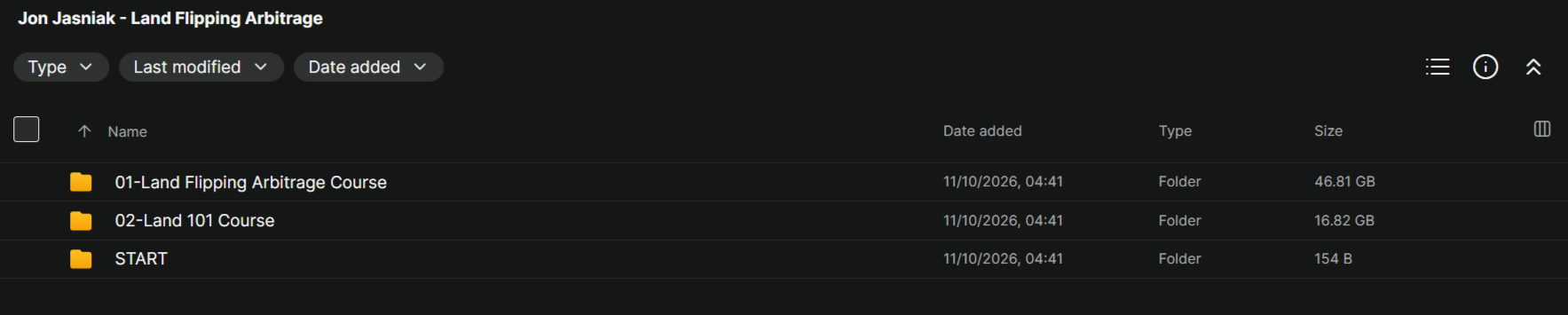
Course description
Jon Jasniak – Land Flipping Arbitrage + Land 101 Course: Learn How to Buy and Sell Land
Real estate investing doesn't always require purchasing houses, managing rental properties, or dealing with tenants. There are other opportunities within the real estate market, and vacant land is one area that investors explore to build wealth.
Land flipping involves finding undervalued parcels, purchasing them at attractive prices, and reselling them to suitable buyers. However, finding a cheap property is only one part of the process. Successful land investing also requires research, due diligence, negotiation, and an understanding of local market conditions.
Jon Jasniak – Land Flipping Arbitrage + Land 101 Course introduces learners to land acquisition, resale strategies, subdividing, and creative financing. The training is designed for people interested in understanding how land transactions work and exploring opportunities in the land investing market.
With more than 50 hours of advertised educational content, the program covers several areas of land investing, along with resources and documents intended to support the learning process.
What Is Land Flipping Arbitrage?
Land flipping is a real estate investment strategy that involves purchasing land below its potential market value and reselling it to another buyer for a profit.
Unlike traditional house flipping, which often involves renovations, contractors, and property improvements, land flipping generally focuses on identifying attractive parcels, evaluating their potential, and finding suitable buyers.
The basic process involves:
Finding potentially undervalued land.
Researching property information and ownership.
Evaluating legal and physical characteristics.
Negotiating a purchase price.
Completing the necessary due diligence.
Marketing the property to potential buyers.
Reselling the parcel at an appropriate price.
The difference between the purchase price and resale proceeds can create a profit opportunity. However, investors must account for transaction expenses, taxes, holding costs, and other potential liabilities.
What Will You Learn in Jon Jasniak's Land Flipping Course?
Jon Jasniak's training focuses on several important areas of land investing. The advertised educational material includes land flipping, subdividing, creative financing, and additional resources.
1. Land Flipping Strategies
The foundation of the training is understanding how to buy and sell land.
Land investors need to identify parcels that may be available below their potential market value. This involves researching available properties, comparing prices, understanding local demand, and identifying potential resale opportunities.
Learning how to evaluate a parcel before purchasing it is essential because a low asking price doesn't necessarily mean a good investment.
The objective is to understand the buying and selling process and develop a more organized approach to land transactions.
2. Land Acquisition and Property Research
Finding land is only the beginning. Before purchasing a parcel, investors need to investigate its legal, physical, and financial characteristics.
Important factors include:
Property ownership and title information.
Zoning regulations and permitted land uses.
Legal and physical access to the property.
Availability of utilities.
Property taxes and outstanding obligations.
Environmental restrictions.
Comparable property sales.
Local buyer demand.
These factors can significantly influence a property's value and resale potential.
A parcel may appear inexpensive but could have access problems, development restrictions, or other issues that make it difficult to sell.
3. Land Subdividing Techniques
Land subdividing involves dividing a larger parcel into smaller lots, subject to local regulations and approval requirements.
This can create additional opportunities for land investors because smaller parcels may appeal to different buyers than a single large property.
However, subdivision isn't simply a matter of dividing land on a map. Investors need to understand zoning requirements, minimum lot sizes, road access, utility availability, surveying expenses, and local approval processes.
Jon Jasniak's advertised training includes land subdividing as one of its key educational subjects.
4. Creative Financing for Land
Financing is another important part of real estate transactions.
Creative financing refers to alternative ways of structuring property purchases and sales instead of relying exclusively on traditional financing arrangements.
Understanding financing options can help investors evaluate different transaction structures and negotiate with potential buyers or sellers.
However, financing arrangements involve legal and financial responsibilities. Investors should understand the contract terms, payment obligations, interest, and applicable local regulations before entering an agreement.
Why Consider Land Flipping as an Investment Strategy?
Land investing attracts people who want to explore real estate opportunities without necessarily becoming landlords.
Vacant land generally doesn't involve the same tenant-management responsibilities associated with rental houses. However, that doesn't mean land investments are free from ongoing expenses or management requirements.
Potential advantages include:
Exploring real estate with different investment strategies.
Identifying opportunities to purchase undervalued parcels.
Learning property research and negotiation.
Exploring subdivision opportunities.
Understanding alternative financing arrangements.
Building knowledge of land markets and resale strategies.
Every parcel is different, and profitability depends on the purchase price, property characteristics, expenses, market demand, and ability to find a suitable buyer.
Who Should Take the Land Flipping Arbitrage + Land 101 Course?
This training may be relevant to several types of learners.
Beginner Real Estate Investors: People interested in exploring land investing and understanding how buying and selling vacant land works.
Aspiring Land Flippers: Individuals who want to learn about sourcing properties, evaluating parcels, negotiating purchases, and reselling land.
Real Estate Entrepreneurs: People interested in exploring land subdividing and creative financing as additional real estate strategies.
Existing Property Investors: Investors who want to expand their knowledge beyond traditional residential properties and rental investments.
Self-Directed Learners: People who prefer structured educational material and resources to develop their understanding of land transactions.
What Is Included in Jon Jasniak's Training?
According to the supplied course information, the program advertises more than 50 hours of educational content.
The advertised topics and resources include:
Land flipping training.
Land subdividing education.
Creative financing for land.
Additional resources and documents.
Educational material covering different aspects of land investing.
The training is intended to provide learners with a broader understanding of buying and selling land.
For the latest course pricing, enrollment details, access conditions, and included materials, check Jon Jasniak's official website directly.
Important Things to Understand Before Investing in Land
Land flipping can create investment opportunities, but purchasing property without proper research can lead to expensive mistakes.
Before acquiring any parcel, investors should investigate its title, zoning, legal access, utilities, environmental restrictions, property taxes, and comparable sales.
It is equally important to understand the local market. A property may have an attractive purchase price but limited resale demand.
Investors should also account for closing costs, holding expenses, taxes, surveying, legal fees, and other transaction-related costs.
No training program can guarantee profitable deals. Land investment outcomes depend on research, local regulations, market conditions, negotiation, and execution.
How to Start Learning Land Flipping
A practical way to approach land investing is to build your knowledge before committing significant capital.
Start by understanding how land transactions work and how investors identify potentially undervalued parcels.
Next, study property research, comparable sales, zoning, and access requirements. Once you understand these fundamentals, explore negotiation, resale strategies, subdivision opportunities, and creative financing.
Jon Jasniak's Land Flipping Arbitrage + Land 101 Course provides an educational starting point for exploring these subjects through its advertised training material.
Final Thoughts: Learn the Fundamentals of Land Investing
Land flipping offers an alternative approach to real estate investing for people interested in buying and selling vacant land.
However, finding an inexpensive parcel is not enough. Investors need to understand property research, legal requirements, market demand, negotiation, and the costs associated with each transaction.
Jon Jasniak's Land Flipping Arbitrage + Land 101 Course brings together several important areas of land investing, including land flipping, subdividing, creative financing, and additional educational resources.
Whether you're new to real estate or looking to explore another investment strategy, learning these fundamentals can help you evaluate opportunities more carefully.
Ready to explore land investing? Learn the fundamentals of buying, evaluating, and selling land with Jon Jasniak's training and start developing your understanding of the land flipping business.
Frequently Asked Questions (FAQs)
1. What is Jon Jasniak's Land Flipping Arbitrage Course?
It is an educational training program focused on land flipping, land acquisition, subdividing, and creative financing.
2. How much content does the course include?
The supplied course description advertises more than 50 hours of educational content.
3. Does the training cover land subdividing?
Yes. Land subdividing is one of the advertised subjects covered in the training.
4. What is creative financing for land?
Creative financing involves alternative ways of structuring land purchases and sales beyond traditional financing arrangements.
5. Is land flipping suitable for beginners?
Beginners can explore land flipping by learning property research, due diligence, negotiation, and resale fundamentals before investing their money.
6. Do land flipping investments guarantee profits?
No. Profitability depends on property value, purchase price, transaction expenses, local demand, legal requirements, and resale opportunities.
7. Do land investors need to research zoning and property access?
Yes. Zoning, legal access, utilities, title, and environmental restrictions are important factors to investigate before purchasing land.
Member reviews
No reviews yet
Be the first member to review this course.
Write a review
Related courses

Caleb Hammer - Master Your Money Bundle
4.9(116 ratings)by Genie Team
Learn budgeting, debt management, investing, and real estate with Caleb Hammer’s four-course bundle, featuring practical lessons, tools, and worksheets.
$667 · Included in Pro
Explore
Christine Ivette - 7 Ways To Wealth
4.7(128 ratings)by Genie Team
Explore Christine Ivette’s Wealthy Trustee Program to learn about trust structures, asset protection, wealth preservation, and generational legacy planning.
$2500 · Included in Pro
Explore
Matthew Larsen - 10k Per Month
5.0(153 ratings)by Matthew Larsen
Learn how to grow your agency to $10K per month with proven strategies for sales, offers, client outreach, content creation, and business development.
$97 · Included in Pro
ExploreFree guides & comparisons
Helpful tutorials and platform comparisons related to this course.
$199
Unlock from $99